
Faculty-Led Programs and Title IX: What Department Chairs Need to Know
Most department chairs assume Title IX travels with the group. It does not — at least not in the way you probably expect. The gap between what faculty believe applies abroad and what the regulations actually require is one of the most common blind spots we see when institutions send us a programme for review. This guide sets out what genuinely applies when your students leave the country, where your own institutional policy has to fill the gap, and the design decisions you can make nine months out that reduce risk far more effectively than any form you sign the week before departure.
A caveat before we start. We are a programme operator, not your counsel; Title IX regulation has been unusually turbulent since 2024, and your Title IX Coordinator and General Counsel are the only people who can tell you what your obligations are. What follows is the practical framing we use with the faculty leads we work with.
What Title IX actually covers once the group leaves the country
Title IX prohibits sex discrimination in any "education program or activity" receiving federal financial assistance. A faculty-led programme is unambiguously an education programme of your institution. You recruit for it, award credit for it, and a member of your teaching staff leads it. On that point there is no ambiguity.
The complication is jurisdictional. The 2020 regulations — which, following the nationwide vacatur of the 2024 rule in January 2025, are the regulations most institutions have been operating under since — define the covered education programme or activity as one occurring within the United States. The practical effect is that conduct occurring on a programme in Sri Lanka or Peru generally falls outside the mandatory Title IX grievance process, even though it occurred on your programme, under your faculty member's supervision, with your students.
This is where chairs get caught out. "Outside the mandatory grievance process" is not the same as "nobody is responsible." Three things remain true:
- Your student code of conduct almost certainly still applies. Most institutions extend their conduct code to any institution-sponsored activity regardless of location, and many have written a parallel non-Title-IX sexual misconduct policy specifically to cover this gap. Find out whether yours has.
- Clery Act obligations do not disappear. Where your institution controls space abroad — accommodation booked for the group, a field site used repeatedly — that can constitute a non-campus location, with the disclosure and timely-warning duties that follow.
- Downstream effects are squarely covered. If a student is assaulted abroad and then shares a seminar room with the respondent in the autumn term, those hostile-environment consequences are occurring in the United States.
The question to take to your Title IX Coordinator is not "does Title IX apply abroad?" It is: "which policy governs a report from this programme, who receives it, and what process follows?" If nobody can answer that in one sentence, the policy work is not finished.
The reporting gap — who does a student tell at 2am in Colombo?
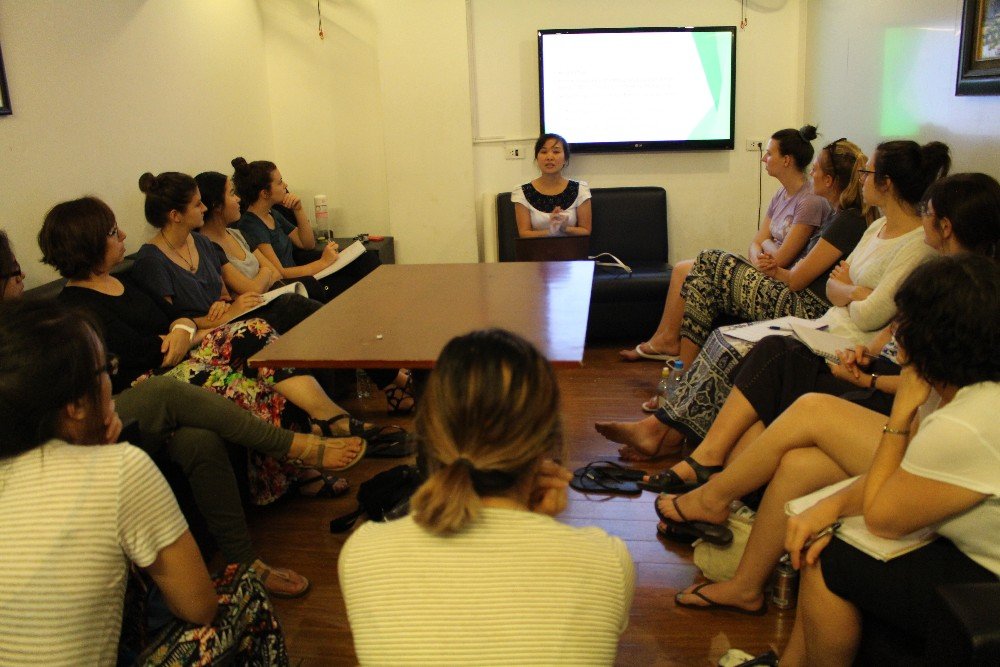
Policy questions are answered in an office. Reports happen at inconvenient hours, eight time zones away, often to whoever is nearest. And on most faculty-led programmes the person nearest is the faculty lead — who may also be the student's dissertation supervisor, their reference for graduate school, and the person grading the work the trip is assessed on.
That concentration of roles is the single biggest structural risk in a faculty-led programme, and it is worth naming plainly with your faculty lead before departure. Two students in three will not report to the person holding their grade. Build at least one alternative route and publish it before you fly:
- A named person at home who is awake when the group is asleep. Not a general inbox. A named Title IX or Dean of Students contact with a direct number, briefed in advance that this group is travelling and during which dates.
- An in-country contact independent of the academic chain. On our programmes this is the in-country team lead, who is not a member of your faculty, does not assess anyone, and is reachable 24/7. Students consistently use this route more than institutions expect.
- A written route that works without a local SIM. WhatsApp, iMessage, an email address — something reachable on guesthouse wifi at 2am. A phone number a student cannot dial is not a reporting channel.
Put all three on a card, in the handbook and in the group chat, and repeat them at the arrival briefing — not only at pre-departure, when students were thinking about vaccinations.
Faculty leads are responsible employees — and human beings in the next room
Two things that need saying to your faculty lead, ideally in a conversation rather than an email.
First, clarify their reporting status. Under most institutional policies faculty are responsible employees or mandatory reporters, and that status does not lapse at passport control. If a student discloses on a minibus in Kandy, the faculty member has an obligation and needs to know what it is before it happens — including the fact that they generally cannot promise confidentiality, and should say so early rather than after a disclosure has begun.
Second, the power dynamic. Faculty-led programmes compress a semester's worth of proximity into two weeks: shared meals, long transfers, evenings in a small guesthouse, alcohol in a jurisdiction where the drinking age is lower than at home. Behaviour that reads as collegial warmth on campus reads differently at 11pm in a hotel bar with eight students. Set an explicit expectation — no drinking in students' accommodation, no one-to-one social meetings in bedrooms. Most faculty find this a relief to have stated rather than left to judgement.
If your group is larger than about fifteen students, send a second staff member, ideally not of the same gender as the lead. That cost is far smaller than the cost of one person managing a medical evacuation and a disclosure in the same 24 hours.
Design decisions that reduce risk before you fly
Almost everything that goes wrong on a group programme was decided nine months earlier by someone comparing quotes. These are the choices that matter, and where a well-built faculty-led programme earns its margin.
- Accommodation. Same-building or same-floor rooming for the whole group. Lockable doors, verified. No mixed-gender rooming allocated by an operator without the students' consent. If the programme uses homestays, ask directly how host families are vetted, how often they are visited, and whether the operator has ever removed one.
- Rooming policy in writing. Students choose roommates, or a documented process allocates them — and a student who wants to change rooms mid-programme can do so without explaining why to anyone who grades them.
- Alcohol. A written policy that acknowledges reality. Most 20-year-olds can legally drink in Sri Lanka, Peru or Vietnam. A prohibition nobody enforces is worse than a clear rule about where, when and with whom.
- Free time. Unstructured evenings are when incidents happen. That is not an argument for eliminating them — it is an argument for a buddy rule, a curfew, and a check-in someone actually performs.
- Local legal context. Some destinations criminalise same-sex relationships. LGBTQ+ students are entitled to know this before they commit money, and to have it explained factually rather than glossed over in a brochure. It belongs in the destination briefing, not in a difficult conversation at the airport.
- Withdrawal mid-programme. Decide, in writing, who has authority to send a student home, who pays for the flight, and what happens to their credit. Nobody should be improvising this at 3am.
We publish how we handle the operational half of this on our safety page, and the answers we give most often on the FAQ. If a question you need answered is not on either, it is a fair question to put to us directly.
What actually belongs in pre-departure training

Research on study abroad has consistently found rates of unwanted sexual contact among undergraduates abroad running higher than on their home campuses — with the first weeks the highest-risk period, before students have local bearings, language, or a sense of which situations to leave. Front-load the training accordingly.
A workable ninety minutes, delivered by someone other than the faculty lead:
- Reporting routes — the three channels above, named and written down, with a card students keep.
- What happens after a report — honestly. Including that the faculty lead cannot keep it confidential, and who can (campus counselling, in most institutions).
- Consent and the local legal picture — including that local law may offer less protection than students assume, and that the institution's own conduct code still governs their behaviour towards each other.
- Bystander intervention adapted to a small group — the campus version assumes anonymity and a crowd. Fourteen people in one guesthouse needs different scripts.
- Medical and evacuation logistics — nearest hospital, what the insurance covers, who calls whom.
- A signed student agreement covering conduct, alcohol, curfew and grounds for removal.
Then repeat points 1 and 2 on the first evening in-country. A pre-departure session held in April is largely gone by July.
The first 24 hours after a report
Agree this sequence with your Title IX Coordinator before departure and give the faculty lead a one-page version to carry:
- Safety first, process second. Separate the parties, change rooming, move accommodation if needed. None of this requires a determination of what happened.
- Offer support, do not investigate. The faculty lead's job is to listen, secure safety and pass it on — not to interview witnesses. Well-intentioned fact-finding by an untrained person routinely damages a later process.
- Notify the named home contact the same day, in writing, with times and facts and no speculation.
- Ask the student what they want to happen — continue, change rooms, fly home — and know in advance what each option costs and who bears it.
- Local police reporting is the student's decision, not the institution's, and deserves a frank account of how that process realistically works in that country.
- Document contemporaneously. Notes written the same evening are worth far more than a reconstruction three weeks later.
Questions worth asking your in-country operator
Any operator running educational travel for university groups should be able to answer these without checking:
- Who is our named in-country contact, and are they reachable at 3am local time?
- How are accommodation providers, drivers and host families vetted — and when was one last removed?
- What is the escalation path if the faculty lead is the subject of a concern?
- Do your in-country teams receive safeguarding training, and how recently?
- Have you managed a mid-programme student withdrawal before, and what happened?
Our answers come from our own in-country teams — in Sri Lanka, the same team for eighteen years, which is the practical reason we can answer the vetting question in specifics rather than in policy language. Our sister brand Volunteering Solutions has placed individual students on that same infrastructure since 2006, and independent verification of how we treat participants and staff sits behind our B Corp certification, at an Impact Score of 88.2.
None of this replaces your own policy work. But an operator who has thought about the reporting gap before you raise it is a meaningfully different partner from one who has not.
Where to start
If you are nine to twelve months out, three things this term will put you ahead of most departments: get a written answer from your Title IX Coordinator on which policy governs conduct on the programme; name a home-side contact and put their number in the handbook; and agree rooming and alcohol policies before students see a price.
If you are still choosing a destination, our destinations overview sets out the practical picture country by country. When you want to see how a specific course would work, request a proposal — we come back within 48 hours with destination options, a per-student price band, and the safeguarding documentation your travel committee will ask for anyway.
Related reading: Faculty-Led Programmes Abroad: The Complete 2026 Guide and Risk Management for Faculty-Led Programs: A Department Chair's Checklist.