
Safety Abroad for Student Groups: A Pre-Departure Briefing Template
The pre-departure briefing is the single highest-leverage hour in a student group programme. It is the only moment when every traveller is in one room, before the excitement of arrival crowds out the detail. Run well, it prevents most of the incidents that later fill an insurance claim form. Run as a rushed slide deck the week before flights, it becomes a compliance box rather than a safety measure. This is the briefing template we use with faculty groups, section by section, with the timings, the documents and the awkward conversations that actually matter.
Why the briefing is a safety control, not a formality
Across 18 years of running group programmes — through Volunteering Solutions and now under the Impact Explorers umbrella — the pattern in incident reports is consistent. Serious incidents on student programmes are rarely exotic. They cluster in five ordinary places:
- Road transport — by a wide margin the largest single risk category on any overseas programme
- Water — unsupervised swimming, rip currents, quarries and rivers on free afternoons
- Alcohol — usually as a multiplier on the two risks above rather than a standalone cause
- Minor illness handled late — dehydration, untreated stomach upset, a small wound that becomes an infection
- Students separating from the group — most often on a free evening in an unfamiliar city
None of those require specialist expertise to mitigate. They require students to have heard specific, concrete instructions from a person they respect, in advance, with the reasoning attached. That is what the briefing is for. A briefing that says "be sensible and stay safe" achieves nothing. A briefing that says "no tuk-tuks after dark, use the WhatsApp group to request the programme van, the number is in your wallet card" changes behaviour.
The test of a good briefing is not whether students enjoyed it. It is whether, three weeks later and 8,000 miles from campus, a 19-year-old can recall the one instruction that applies to the situation they are in.
Timing: run it twice, not once
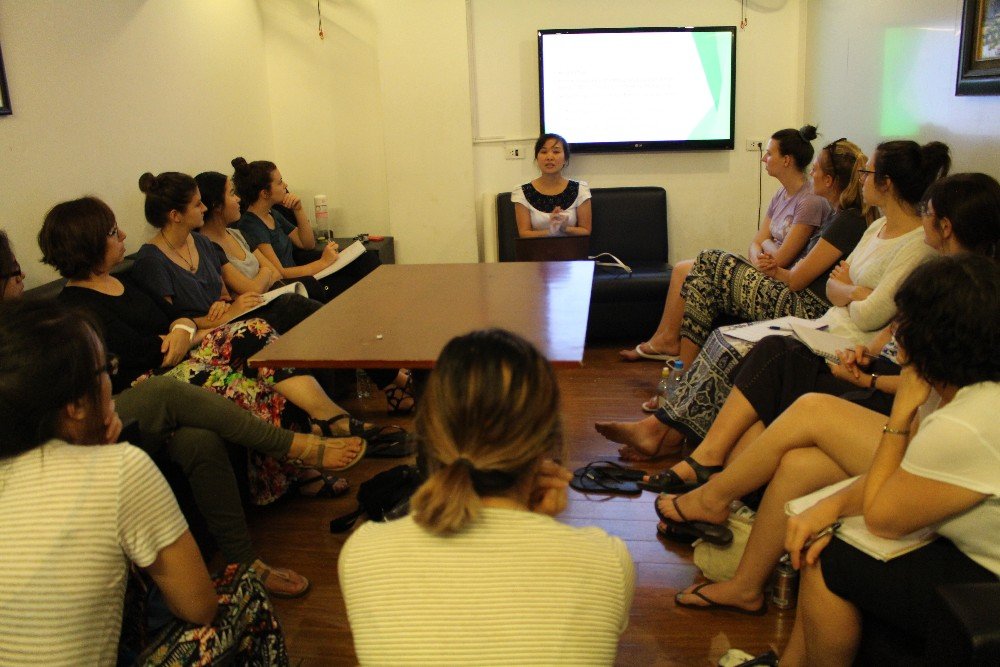
The most common structural mistake is a single briefing squeezed in seven days before departure, when students are deep in exams and absorbing nothing. Split it.
- Briefing One — 6 to 8 weeks out (90 minutes, in person, attendance mandatory). This covers everything that requires students to do something: vaccinations, visas, insurance declarations, medication disclosure, passport validity. Anything with a lead time belongs here, because six weeks is enough runway to fix a problem and one week is not.
- Briefing Two — 7 to 10 days out (60 minutes, in person). This is behavioural and situational: ground rules, transport, money, health, communications, what to do when something goes wrong. It works close to departure precisely because it is what students need to remember on landing.
Both should be in person. A recorded video is a supplement, not a substitute — attendance at Briefing One is also your last practical checkpoint for spotting the student who has not applied for a visa. For programmes we operate, our in-country teams join Briefing Two by video for the final fifteen minutes, so every student has seen the face of the person who will meet them at the airport. That single detail measurably increases the rate at which students actually call for help rather than trying to solve a problem alone.
Briefing One: the administrative block
Work through these in order, and record completion per student on a single tracker rather than in email threads.
Documents and entry requirements
- Passport valid for six months beyond the return date, with at least two blank pages
- Visa route confirmed in writing — note that requirements differ by nationality, and international students in your cohort will frequently have a different route from domestic students. Check every passport, not the majority
- Photocopies and a secure digital copy of the photo page, stored somewhere the student can reach without their phone
Health and medical disclosure
- Travel health appointment booked at least six weeks out — some vaccination courses need multiple doses spaced weeks apart
- Antimalarials where relevant, with a clear explanation that adherence starts before departure and continues after return
- A confidential medical disclosure form collected by a named staff member, covering existing conditions, prescription medication, allergies and mental-health support needs
The disclosure form deserves care. Students under-declare mental-health history in particular, usually because they fear being excluded from the trip. State explicitly, in writing and out loud, that the purpose of disclosure is to arrange support rather than to screen people out, and name the very small number of circumstances in which a condition would genuinely affect participation. Departments that say this plainly get materially better disclosure rates.
Insurance
Confirm each student is covered for medical treatment, emergency evacuation and repatriation, and that the policy covers every activity on the itinerary. Adventure activities, motorcycle travel and any clinical or patient-facing work are the usual exclusions that catch groups out. Ask for the policy number and the 24-hour assistance line, and put both on the student's wallet card. We cover the policy questions worth asking in more detail on our safety and risk management page.
Briefing Two: the behavioural block
This is the session that changes what students do. Keep it concrete and locally specific — generic advice is forgettable advice.
1. Ground rules, stated as rules
Write down five to seven non-negotiables and read them aloud. Ours typically include: no swimming without a staff member present; no motorbikes or scooters as driver or passenger; no leaving the accommodation alone after dark; and a hard rule that a student who feels unwell tells staff the same day rather than the next morning. Ambiguity in a rule is an invitation to negotiate it at 11pm in a country where you are not present.
2. Transport
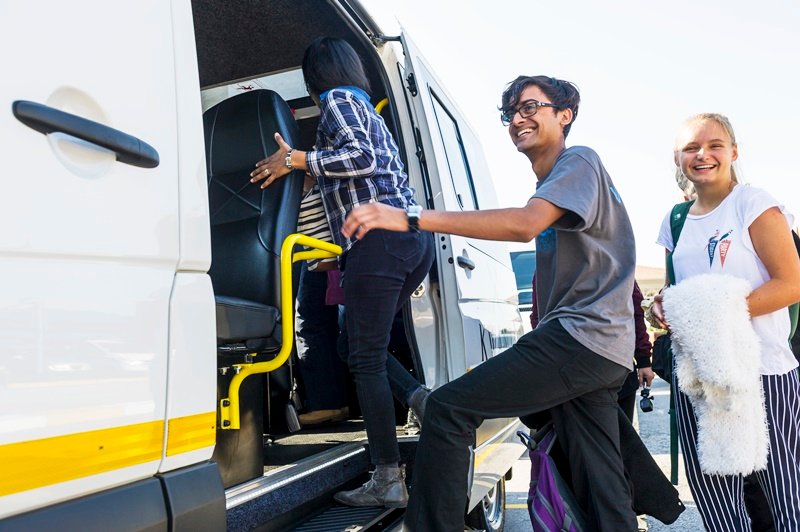
Name the approved transport for the destination, and the specific things not to use. In Sri Lanka that means the programme vehicle and pre-booked drivers rather than flagging down a tuk-tuk after dark; elsewhere it may mean licensed taxis booked through a named app only. Explain seatbelts, and expect to be ignored unless you explain why. Road traffic incidents dwarf every other category of harm on overseas programmes.
3. Health in the field
- Water: what is safe to drink, and where refill points are
- Heat: realistic fluid intake, and the early signs of heat exhaustion in a peer
- Stomach upset: oral rehydration salts in every kit, and the threshold at which to tell staff (more than 24 hours, any fever, any blood)
- Wounds: clean and cover immediately — a graze that would be trivial at home behaves differently in humidity
4. Money and valuables
Cash split across two places, a card that works locally, a realistic daily budget, and clear guidance that the phone in a back pocket on a crowded street is the single most-stolen item on any programme.
5. Communications and the escalation ladder
Every student should be able to answer, without looking it up: who do I call first, second and third? For our programmes that is the in-country coordinator, then the 24/7 duty line, then the faculty lead. Put all three numbers on a physical wallet card, because the scenario in which a student most needs the number is often the scenario in which the phone is gone.
6. Cultural context and conduct
Dress expectations at religious and clinical sites, photography consent — particularly around children and patients — alcohol norms, and the standard of conduct expected of a visitor. Frame this as professional behaviour rather than as etiquette. Students on a faculty-led group programme are representing an institution and, more importantly, a relationship with a community that has to survive after they leave.
7. What to do when something goes wrong
Rehearse three scenarios out loud: you are separated from the group; a peer is unwell overnight; you have lost your passport. Ninety seconds each. Students who have said the answer aloud once recall it under stress far better than students who have read it on a slide.
What to hand out, and what to collect back
Each student leaves Briefing Two with a wallet card (three emergency numbers, accommodation address in English and in the local language, insurance policy number, blood group), a one-page itinerary with daily locations, and the ground rules on paper. You collect back a signed code of conduct, the completed medical disclosure, insurance confirmation, and next-of-kin details with a second contact.
Keep one master document listing every student, their emergency contacts, medical flags and passport number. It should live with the faculty lead in hard copy and with your in-country partner — not solely in a cloud folder that requires a working phone and connectivity to open.
Where the operator's responsibility begins
A briefing is only as good as the operational reality behind it. When we scope educational travel programmes, the safety documentation we supply — risk assessments per activity, vetted accommodation and transport, incident-reporting protocols, and 24/7 in-country contacts — is what makes the briefing's promises true. That documentation should arrive early enough for your travel committee's review, typically 6 to 9 months before departure on a standard 9–12 month timeline.
It is a fair question to ask any operator how they are held accountable when nobody is watching. Our answer is B Corp certification, with an Impact Score of 88.2 assessed against the same standard applied to worker welfare, community relationships and governance — you can read what that covers on our B Corp page. It is not a safety certification, and we would not claim it is one. It is evidence that the way the programme is run is independently examined rather than self-declared.
Adapt the template, don't copy it
Two destinations rarely need the same briefing. A conservation programme with water activity and a clinical placement with patient contact share perhaps 60% of their content and diverge sharply on the rest. Build the block above once, then rewrite sections 2, 3 and 6 for each destination — those are the sections where specificity does the work.

Our destination pages set out the local context worth reflecting, and the country-level detail in the 2026 destinations guide is a reasonable starting point for a first draft.
If you would like the version of this template we use for a specific destination and course type, along with the accompanying risk assessments, request a proposal and tell us the destination, group size and travel window. Proposals typically come back within 48 hours, and the safety documentation comes with them rather than after you have signed.
Related reading: Risk Management for Faculty-Led Programs: A Department Chair's Checklist and Faculty-Led Programmes Abroad: The Complete 2026 Guide.