
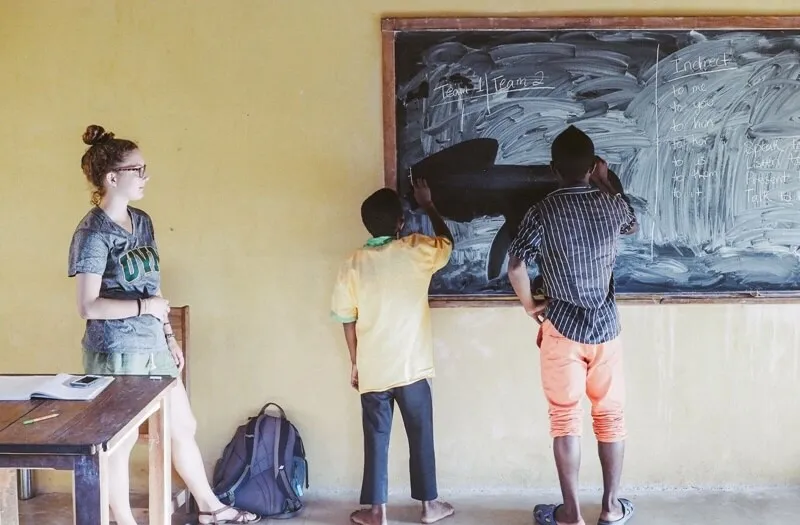
Service-Learning vs Faculty-Led vs Study Abroad: Which Fits Your Course?
Service-learning, faculty-led programmes and traditional study abroad are three different products solving three different problems — and choosing the wrong one for a particular course is the single most common planning mistake we see in 2026. This article explains what each of the three actually is, where each one delivers measurable value, how they compare on cost and learning outcomes, and which to choose for a given course objective. It is written for department chairs, study-abroad officers and course leaders who are trying to decide between them.
Quick definitions
- Study abroad (semester or year): an individual student enrols at a foreign university for a full term, taking courses there as part of their home degree. Typically 4–10 months. Independent of home faculty in delivery.
- Faculty-led programme (sometimes "embedded" or "short-term study abroad"): a group of students from the home institution travels with their own faculty member for 1–4 weeks. The home faculty designs and leads the academic content; an in-country operator handles logistics.
- Service-learning: a pedagogical method that combines structured community service with academic study and structured reflection. Can be delivered domestically (at home) or internationally; can be embedded inside a faculty-led programme, a study-abroad semester, or a stand-alone course.
Importantly, these categories overlap. A faculty-led programme can use service-learning pedagogy. A study-abroad semester can include service-learning components. The right way to think about them is as three different decisions: format, leadership, and pedagogy.
Side-by-side comparison
Duration
- Study abroad: 4–10 months
- Faculty-led: 1–4 weeks
- Service-learning: variable — can be one-day, semester-long at home, or embedded in any of the above
Cost per student
- Study abroad: $18,000–$35,000 per semester (US institutional pricing) or £8,000–£14,000 per semester (UK pricing) — usually tuition-equivalent
- Faculty-led: £950–£2,400 per student for a 10–14 day programme (excluding international flights)
- Service-learning at home: typically the cost of a standard course; if added to a faculty-led programme, no additional cost
Academic credit awarded
- Study abroad: 12–18 credits per semester typically
- Faculty-led: 3–6 credits typically (depends on programme length and assessment design)
- Service-learning: 3–4 credits when delivered as a stand-alone course; embedded in faculty-led typically attached to the course's standard credit allocation
Reach (% of student body that can participate)
- Study abroad: typically 5–15% of students at most institutions — limited by course-sequencing constraints, financial barriers, family commitments
- Faculty-led: typically 15–35% of students in participating departments — fits around course sequences, fits working students, fits Pell-eligible students with subsidies
- Service-learning: can reach 100% of a course if embedded in a required class
Faculty involvement
- Study abroad: home faculty not involved in delivery; only in pre-trip advising and post-trip credit transfer
- Faculty-led: home faculty designs and delivers throughout
- Service-learning: home faculty designs and delivers; reflection sessions and assessment are faculty-owned
Best fit for which course objectives
- Study abroad fits: deep language acquisition, broad cultural immersion, comparative academic experience across institutions, students wanting to genuinely embed in a foreign society
- Faculty-led fits: course-specific field exposure, group cohort experiences, integration with a course's existing learning outcomes, reach to students for whom semester abroad isn't feasible
- Service-learning fits: courses where students learn through structured engagement with community problems; pedagogy that's particularly strong for social sciences, education, public health, business, environmental studies
Where each one fails
Where study abroad fails
- Cost barrier. The financial gap between full-tuition semester abroad and what most undergraduate students or their families can fund excludes the majority of student bodies.
- Course-sequencing rigidity. STEM students with prerequisite chains, professional-school candidates (pre-med, pre-law) with bar exams or MCATs, and transfer students often can't fit a semester out.
- Pastoral overhead. Long-duration independent travel means more student-welfare incidents per cohort. Most institutions are now expanding their study-abroad support staff faster than their study-abroad numbers.
- Weak integration with home curriculum. Courses at the foreign institution rarely map exactly onto home-degree requirements, leading to credit-transfer headaches and watered-down post-trip integration.
Where faculty-led fails
- Depth-of-immersion ceiling. Two weeks isn't enough time for deep language acquisition or for students to genuinely embed in a foreign society. Faculty-led delivers focused depth on specific topics, not broad cultural immersion.
- Faculty workload. Designing and leading a faculty-led programme is real work — 80–120 hours of pre-trip planning, full-time presence during the trip, and post-trip assessment. Departments need to recognise this in workload allocations.
- Recruitment dependency. A programme that fails to hit minimum group size fails entirely. This puts pressure on the lead faculty member to also be a recruiter.
- One-faculty failure point. If the lead faculty has a personal emergency during the programme, the institution has limited fall-back options unless a co-leader was designated up front.
Where service-learning fails
- Quality-of-reflection variance. Service-learning's pedagogical value depends on the reflection component being well-designed. Programmes that emphasise the service hours and skimp on reflection produce volunteer hours without learning outcomes.
- Risk of unethical placements. International service-learning can drift into the territory of "voluntourism" if the placements aren't carefully selected. See our guide to ethical volunteer programmes.
- Assessment difficulty. Assessing the learning gained from service experiences is harder than assessing essay or exam performance. Departments using service-learning for the first time often under-invest in assessment design.
How to choose: a four-question decision tree
- Is your goal broad cultural and linguistic immersion, or focused course-specific learning? If broad immersion: study abroad. If focused course-specific learning: faculty-led with optional service-learning component.
- How many students do you want this to reach? If 5–15% of a department: study abroad is appropriate. If 15–35% of a department: faculty-led. If 100% of a course: embed service-learning in a required class, optionally with a domestic component.
- What's your per-student budget ceiling? If $25,000+: study abroad is viable. If $1,500–£3,000: faculty-led fits comfortably. If $0–$500: domestic service-learning is the realistic option.
- How much faculty workload can the department absorb? If high (sabbaticals and release time are available): faculty-led leverages faculty expertise fully. If low: study abroad delegates delivery to the foreign institution.
Cost-per-credit comparison
A useful metric: cost per academic credit delivered. Using realistic 2026 numbers:
- Study abroad semester at $25,000 for 15 credits = $1,667 per credit (excludes flight, insurance, personal spending)
- Faculty-led 14-day programme at £1,400 for 4 credits = £350 per credit (excludes flight)
- Service-learning embedded in a faculty-led programme = same per-credit cost, with the service component as an academic enhancement rather than a cost driver
Faculty-led programmes deliver roughly 4× more credit value per dollar than semester study abroad, with the caveat that they deliver less total immersion. The right question is: how much immersion does your course objective actually require?
Combining them — the strongest programme designs
The most ambitious institutional programmes combine all three categories in a layered approach:
- Year 1: Service-learning embedded in introductory courses (domestic or local, low cost, high reach)
- Year 2 or 3: Faculty-led programme abroad (medium cost, medium duration, course-specific)
- Year 3 or 4 (optional): Semester study abroad for students whose course path and finances permit
This sequencing allows the institution to claim universal international engagement (because faculty-led reaches a much larger fraction of students than semester study abroad ever could) while preserving the depth option for students whose path supports it.
Common questions answered
Can a faculty-led programme replace study abroad?
No — and it shouldn't try to. They solve different problems. Faculty-led programmes broaden international experience across more students. Study abroad delivers depth for the smaller fraction whose course and finances permit it. Most institutions need both.
Is service-learning the same as volunteering?
Related but distinct. Volunteering is contributing time to a cause. Service-learning is a pedagogical method that combines structured service with academic study and reflection. The reflection component is what makes service-learning academic rather than just volunteer activity.
Can a faculty-led programme award the same credit as a semester abroad?
Usually not — credit allocation is proportional to academic contact hours. A 14-day faculty-led programme typically delivers 3–6 credits, against 12–18 for a semester. The exception is "intensive semester" formats where a faculty-led programme is paired with pre-trip and post-trip course components delivered at home.
Can study abroad include service-learning?
Yes — many semester-abroad providers now offer service-learning tracks where students complete a structured community-service component alongside their foreign-university courses. The quality varies; ask the provider for the reflection-pedagogy design and the community-partner due diligence.
What if my course is in a STEM discipline where students can't take a semester out?
Faculty-led is almost always the answer. STEM disciplines with rigid course sequences (engineering, biology, chemistry, pre-med) are the most under-served by semester study abroad and the most well-served by short-duration faculty-led programmes. Most successful STEM-discipline international programmes we deliver are 10–17 days at a research site, field station or partner laboratory.
Next step
If you're at the "what should we build" stage, the fastest way to choose is a 30-minute scoping call. Request a proposal and we'll work through the four-question decision tree with your specific course objectives, then come back with a tailored option — faculty-led, embedded service-learning, or a hybrid.
Related reading: A Complete 2026 Guide to Faculty-Led Programmes · Ethical Volunteer Abroad: How to Spot a Good Operator · How Much Does a Faculty-Led Trip Cost?