
Ethical Volunteer Abroad: How to Spot an Operator That Helps vs Harms
The volunteer-abroad industry has had a reckoning over the last decade — and it should have. Programmes that placed unqualified foreign students in roles that required real expertise, orphanage tourism that incentivised family separation, and "feel-good" tourism dressed up as development work all caused measurable harm. This article is a practical guide to telling the genuinely good operators from the marketing-only ones. It is written by an operator that has rebuilt its programmes around these standards over the last decade, and that holds a verified B Corp Impact Score of 88.2 because of how it operates — not because of how it markets.
The four-question test
Before you commit to any volunteer-abroad programme, ask the operator these four questions in writing. Their pattern of answers will tell you everything.
- "Where does the money go?" A reputable operator can tell you, line by line, what proportion of your fee covers: in-country accommodation and meals, programme partner contributions, in-country staff salaries, operator profit margin, and marketing / acquisition cost. If they can't or won't break it down, the programme is not running on a transparent financial model.
- "What problem is this programme solving — and who defined the problem?" Programmes that work address needs identified by the local community or partner organisation, not needs imagined by the operator. Ask who set the priorities. If the answer is some version of "our founder thought," you're looking at a vanity project. If the answer involves a named local partner, an explicit baseline assessment, or a community consultation process, you're looking at something real.
- "What happens to the work I do when I leave?" Volunteers cycle in and out. Programmes that work have a permanent staff member running the project who absorbs your contribution into ongoing work, not a programme that depends on a continuous stream of foreign volunteers to function at all.
- "Can I see the most recent annual report or impact statement, with verified data?" Reputable operators publish verified annual impact data. We publish ours on the B Corp & Impact page. Marketing brochures with selected photos are not impact reports.
Red flags — programmes to walk away from
1. Orphanage programmes
The clearest single rule in 2026: do not volunteer at an orphanage, full stop. The peer-reviewed evidence on orphanage tourism's harms (the "ReThink Orphanages" coalition, UNICEF's 2020 report, the 2018 Lumos investigation) is now overwhelming. Orphanage placements have been shown to incentivise family separation, particularly in Cambodia, Nepal, Haiti and parts of East Africa. Most reputable operators (Impact Explorers included) ended all orphanage programmes years ago. Any operator still offering them in 2026 is operating on outdated standards.
2. "Teach English in a school" programmes for unqualified volunteers
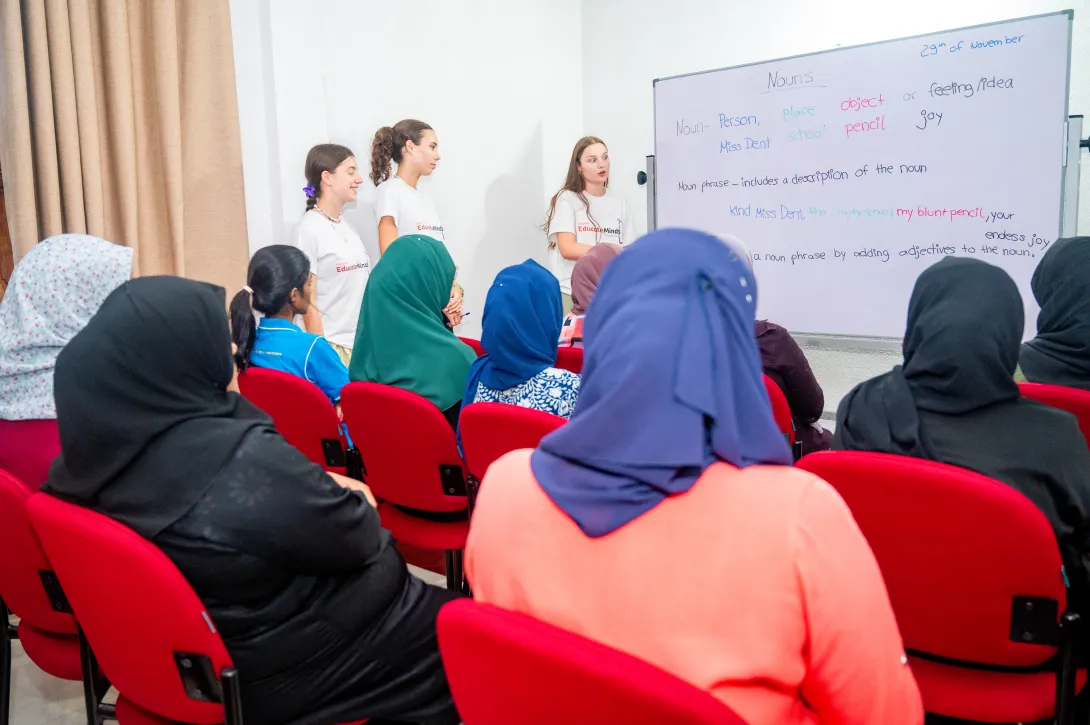
Volunteers without teaching qualifications can usefully support qualified teachers — running conversation practice, helping with reading groups, supporting after-school clubs. They should not be replacing qualified teachers or leading classes. If a programme places you as the primary teacher in a classroom of 30 children, it is failing the children and using you as cheap (or paid-for) labour. The right framing for a classroom volunteer is "teaching assistant under a named local teacher," and the operator should be able to name that teacher in your placement letter.
3. Construction or building programmes for unskilled volunteers
If a school or community needs a building, paying a local construction crew (who do the job faster, more safely, and to better standard) and using your fee to fund it produces better outcomes than having you lay bricks. Construction-volunteer programmes still exist in 2026, and some are legitimate (skilled work or community-led builds where the volunteer contribution is genuinely value-added). Most are not. Ask the operator: would the work happen without volunteers? If the answer is "no, the work depends on volunteer labour," you're being asked to substitute for paid local employment.
4. Medical volunteer programmes for non-medical volunteers
If you're not a clinical professional (or training to be one with supervised scope), do not volunteer in any role that involves patient care, medical decisions, or clinical procedures. The harm potential is high and the "I helped" feeling is low. Public-health programmes (community health education, water-and-sanitation work, vaccination campaign logistics) can usefully involve non-clinical volunteers — but bedside care cannot.
5. Programmes that prioritise photo opportunities
If the marketing material is dominated by white-savior imagery — foreign volunteers cuddling babies they've just met, posing with children whose consent for those photos is questionable, or visibly performing "I'm helping" — the operator has not done the work of building a programme that doesn't need those photos. Reputable operators have a written photography ethics policy and obtain explicit consent from any identifiable subject.
Green flags — operators that operate well
1. B Corp Certification or equivalent independent verification
B Corp Certification is a verified, independent assessment of social and environmental performance, governance, workers, community impact and customer outcomes. It is not self-awarded marketing. Impact Explorers holds a B Impact Score of 88.2, which is 73% higher than the median for all assessed businesses. BETA accreditation (UK), Tourism Cares (US), and Travelife membership are other credible independent standards.
2. Long-term presence in the destinations
Ask how many years the operator has been in each country. Operators with 10+ years in a destination have weathered enough operational situations that their judgement is calibrated. Operators newly arrived in a country are running on instinct.
3. Named in-country teams
The operator should be able to name the senior in-country leadership in each country and explain how they are employed (registered local entity, not freelance subcontractors). Local employment with appropriate tax, labour and safeguarding compliance is the floor, not a feature to brag about.
4. Published impact data
Annual figures, verified externally where possible. Numbers like "volunteers placed" are vanity metrics. Numbers like "% of partner programmes that achieved their stated annual objectives" are real metrics.
5. Honest pricing
You can ask "where does the money go?" and get a specific answer. Operators that obfuscate their financial model usually do so because the model is not defensible.
6. Written safeguarding and partner-due-diligence policies
Available on request, not buried, not marketing-language. If the operator can email you their safeguarding policy in two working days, they have one. If they can't, they probably don't.
What "good" looks like — three real programme examples
Sea Turtle Conservation, Rekawa Beach, Sri Lanka
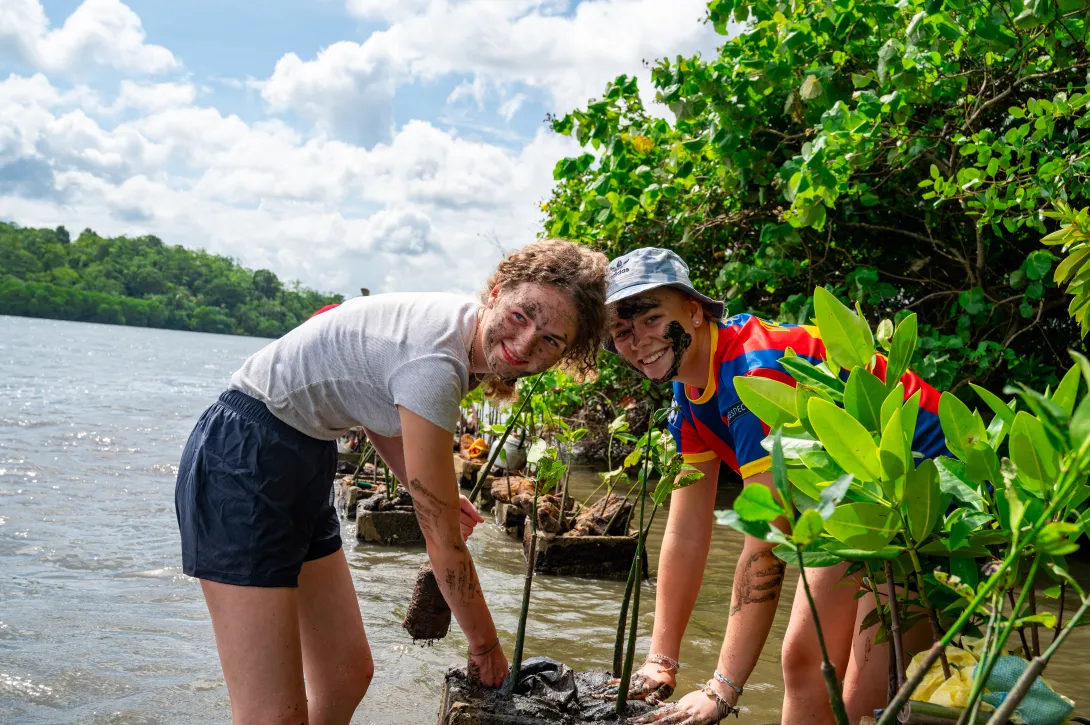
Run by Volunteering Solutions in partnership with the Rekawa Turtle Conservation Project (founded 1996). The project is permanently staffed by Sri Lankan conservationists. Volunteers add value during nesting and hatching seasons by extending patrol coverage and supporting nest-monitoring data collection — work that's been peer-reviewed in three published papers since 2018. Volunteers cycle through; the data and the conservation outcomes accumulate.
Women's Empowerment, Kandy district, Sri Lanka
Partner-led income-generation training programme run by a Sri Lankan NGO. Volunteers contribute to specific defined work streams (digital literacy training, English conversation support, business plan review). The programme would run with or without volunteers — volunteer contributions accelerate existing work rather than substitute for paid local employment. Programme outcomes are measured against income increase, business starts and child-school-attendance rates of participants' households.
Wildlife Veterinary Programme, Kenya
Available only to veterinary students with appropriate qualifications, run with a registered Kenyan wildlife veterinary practice. Volunteers shadow the resident vets, contribute to designated procedures under supervision, and learn wildlife veterinary skills not available in their home curriculum. The qualification gate is a feature, not a restriction — it ensures the contribution is genuinely additive.
Volunteer abroad and academic credit
If your interest in volunteer abroad is partly academic, the rules are:
- Service-learning courses can award credit if the volunteer placement is supervised, documented and assessed against learning outcomes set by your home institution
- Independent study credit for volunteer abroad is offered by many liberal-arts colleges in the US and a growing number of UK universities — requires a faculty sponsor and a written learning agreement before departure
- Faculty-led group volunteer programmes can carry standard course credit because they're built into the course catalogue from the start — see our faculty-led programme guide
Common questions answered
Is "voluntourism" the same as volunteer abroad?
"Voluntourism" is a pejorative term for short-term volunteer programmes that prioritise the volunteer's experience over the programme's outcomes. It exists because too many operators built exactly that — programmes where the volunteer "feels good" and the community is, at best, unchanged. Volunteer abroad done well is different: it's structured contribution to a defined programme, with measurable outcomes, supervised by qualified local staff. The labels are less important than the operational reality.
How long should a volunteer programme be to be useful?
Minimum 1 week, typically 2–8 weeks. Programmes of less than a week rarely produce useful contribution because by the time you've completed orientation and become useful, you're leaving. Programmes longer than 12 weeks usually require a different visa class.
Can I take a gap year doing volunteer abroad?
Yes — and a well-designed gap year of 3–6 months in a single programme produces real skills (cross-cultural communication, project work, language exposure, professional references) that translate into university and career applications. The "structured contribution" framing matters here: a year of meaningful work at one partner organisation is more useful than 12 different short stints.
Will this look good on a CV?
Yes — but for the right reasons. Universities and employers can distinguish "had a meaningful structured experience" from "did voluntourism." Lead with what you contributed and what you learned, not where you went. A line like "Six-month conservation programme with Volunteering Solutions in Sri Lanka — contributed to peer-reviewed nest-monitoring data, supervised by Dr X" beats "volunteered in Sri Lanka" every time.
What if I want to volunteer but am not a student?
Most reputable operators accept adult volunteers of any age. We've placed participants from 18 to 78. Career-break volunteers and retirees often bring professional skills (teaching, engineering, healthcare, business management) that are genuinely additive to programmes.
Next step
If you're researching a volunteer-abroad programme — for yourself, a student, or a group — the fastest way to assess us against the criteria in this article is to request a proposal or browse the Volunteering Solutions website directly. Ask the questions in this article. We'll answer them in writing.
Related reading: B Corp & Impact report · A Complete 2026 Guide to Faculty-Led Programmes · Safety & Support framework