
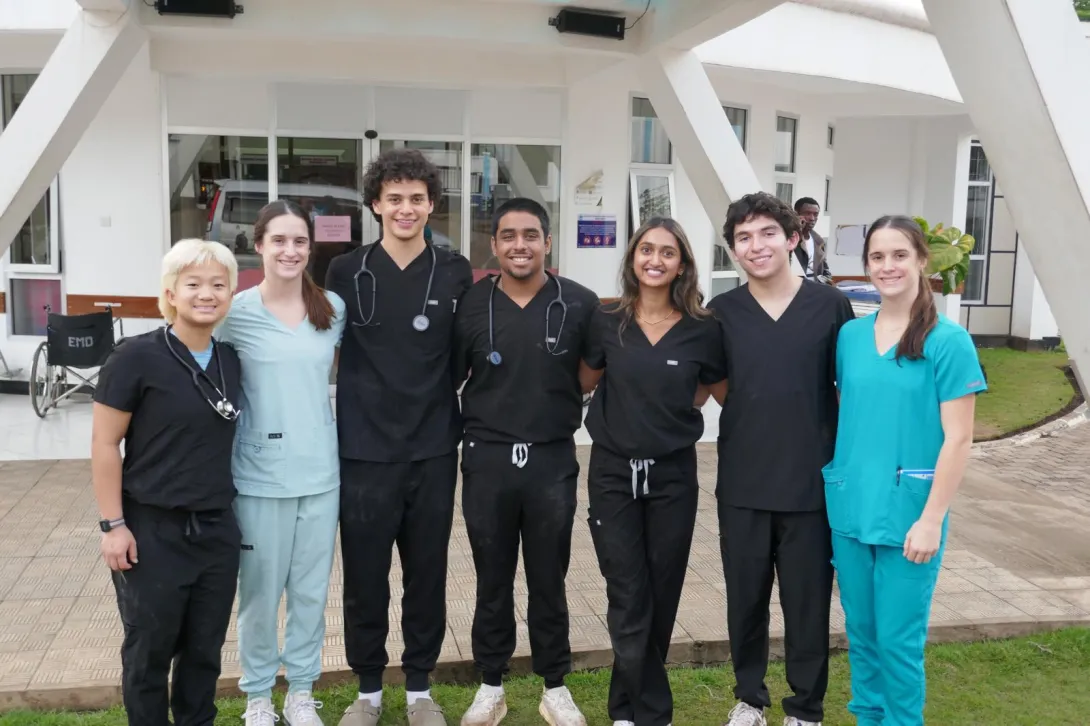
Why Kenya is the Top Destination for Global Health Faculty-Led Trips
Kenya has become the most requested African destination for global health faculty-led programmes — and the reason has almost nothing to do with safari. It has a documented six-tier health system, a devolution experiment that handed service delivery to 47 county governments, a live national health-financing reform, and clinical documentation in English. For a public health, nursing or global health cohort, that combination is difficult to beat. This is a practical look at what Kenya offers academically, where programmes actually run, what students can and cannot do on site, and what a 14-day itinerary costs in 2026.
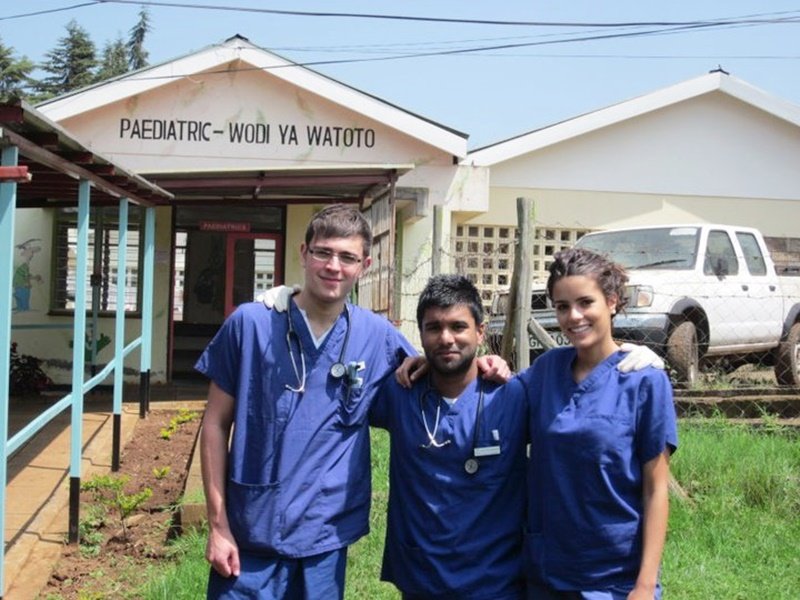
The academic case starts with the health system, not the scenery
Most destination guides sell Kenya on landscape. That is the wrong pitch to a department chair. The reason Kenya works for global health teaching is that its health system is unusually legible — students can see the whole structure inside two weeks, which is rarely true elsewhere.
Kenya's essential health package organises services into six levels:
- Level 1 — community units. Community health promoters working at household level, with defined catchment populations.
- Level 2 — dispensaries. Usually nurse-led, first formal point of contact.
- Level 3 — health centres. Outpatient, maternity, immunisation, basic laboratory.
- Level 4 — sub-county hospitals. Inpatient wards, theatre, wider diagnostics.
- Level 5 — county referral hospitals. Specialist services at county scale.
- Level 6 — national referral hospitals. Kenyatta National Hospital in Nairobi and Moi Teaching and Referral Hospital in Eldoret.
A well-sequenced programme walks a cohort up that ladder in order. Students spend a morning shadowing a community health promoter on household visits, then a day in a dispensary, then a day in a sub-county hospital, then a session at a county referral facility. By the end they have physically traced a referral pathway — the abstraction in the textbook becomes a road, a queue, a paper file, and a decision made by a clinical officer with three minutes per patient.
Very few destinations let you demonstrate that in a fortnight. It is the single strongest argument for Kenya over a comparable East African option.
Devolution turns health policy into a live case study
Kenya's 2010 Constitution devolved health service delivery to 47 county governments, implemented from 2013. National government retained policy, standards and the national referral facilities; counties took on staffing, procurement, facility management and county-level budgets.
For a health policy module this is unusually rich material. More than a decade in, outcomes vary enormously by county — and that variation is the lesson. Students can compare two neighbouring counties with similar demographics and materially different immunisation coverage, stock-out frequency or staff-retention rates, then interrogate why. Health economics, public administration, procurement, industrial relations and political science all sit inside that question.
Running alongside it is Kenya's health-financing reform. The National Hospital Insurance Fund has been replaced by a Social Health Authority structure under the Social Health Insurance Act, with rollout beginning in late 2024. Implementation is contested and still evolving, which is precisely what makes it teachable — students encounter a universal-health-coverage reform mid-flight rather than as a settled case study. If you build a module around it, ask your in-country team for a current briefing during pre-departure preparation; the detail moves quarter by quarter.
The practical advantages that decide proposals
Academic fit gets a destination onto the shortlist. Four practical factors usually decide it:
- An English-language clinical environment. English is an official language and the language of medical training and clinical documentation. Students read real notes, registers and referral forms without a translator — a decisive advantage over francophone or lusophone alternatives, where every observation is mediated by interpretation.
- A genuine double burden of disease. HIV, TB and malaria programmes operate alongside a fast-rising burden of hypertension, diabetes and road-traffic injury. Students see communicable and non-communicable disease management competing for the same budget and the same staff, which is the actual condition of most middle-income health systems.
- Established research infrastructure. The Kenya Medical Research Institute and its long-running international collaborations — including the programmes based in Kilifi and around Kisumu — mean visiting cohorts can encounter working field epidemiology, not only service delivery. Research-methods modules benefit disproportionately.
- Mature travel logistics. Direct long-haul access to Nairobi from the UK, Europe, the Gulf and North America, plus reliable domestic connections and road transfers. Group movement is straightforward, which keeps costs predictable and risk assessments simple.

Where programmes actually run — and why it usually isn't Nairobi
Nairobi's national referral facilities make a useful half-day visit and a poor base for a two-week programme. Placement capacity is heavily competed for, the caseload is tertiary rather than representative, and students end up seeing the exception rather than the system.
Our Kenya programme infrastructure sits mainly in the Rift Valley and in the west:
- Nakuru and surrounding sub-counties — urban and peri-urban health delivery, county referral capacity, good accommodation, short transfers between sites.
- Naivasha and rural Nakuru County — dispensary and health-centre level care, community health promoter attachments, and occupational health angles from the horticulture sector.
- Kisumu and the wider Nyanza region — long-standing HIV and malaria programme presence, strong research and public health context, lakeside communities with distinct disease profiles.
The Maasai Mara works well as a structured weekend at the end of a programme — and for cohorts with a conservation or veterinary component it supports genuine One Health and human-wildlife conflict teaching, rather than being bolted on as tourism.
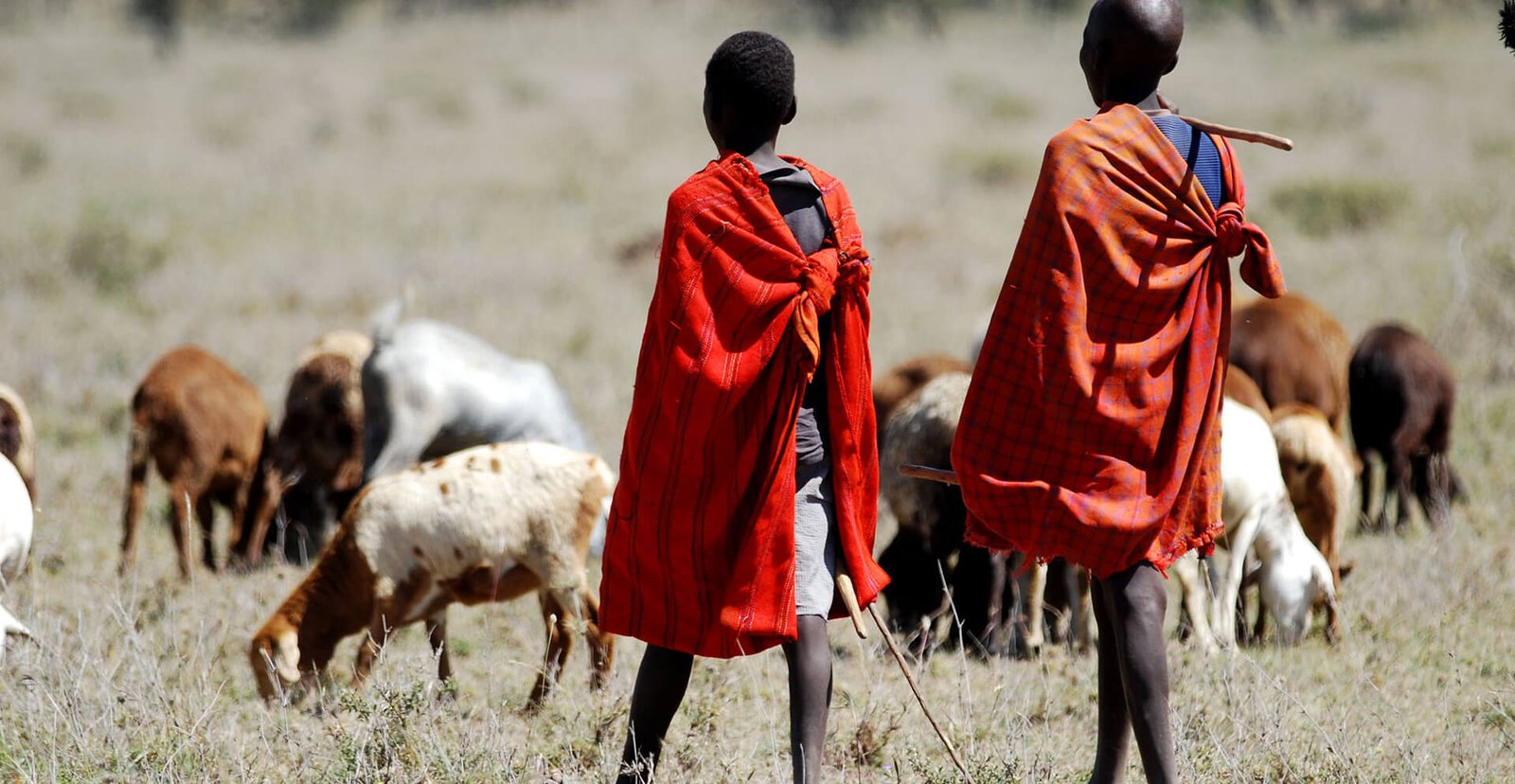
The geography matters for another reason. Programmes based outside the capital are the ones where community health infrastructure is thin enough that a partnership is actually useful, and where fourteen years of in-country relationships translate into placement access that cannot be arranged cold. See how we structure faculty-led group programmes for the full operational model.
What students can and cannot do — have this conversation early
This is where global health programmes go wrong, and it is worth being blunt with your cohort before anyone books a flight.
Undergraduate students, pre-med students and pre-clinical medical students observe. They do not take histories independently, perform procedures, prescribe, or deliver care they would not be permitted to deliver at home. Any operator implying otherwise is selling something your risk-management office should reject.
What observation actually yields, when it is structured well:
- Facility-level data collection against a defined research question, with permissions arranged in advance
- Community health assessment and household survey work alongside a community health promoter
- Health-education sessions delivered to community groups on agreed topics, prepared before departure
- Structured interviews with facility managers, county health officials and clinical staff
- Referral-pathway mapping and stock-availability audits — mundane, and consistently the most-cited work in student reflections
Clinical students at an appropriate stage of training, with home-institution sign-off, are a separate case: supervision, indemnity and scope are agreed formally in advance. That pathway sits with our medical brand, Med Trips, which handles elective placements, supervision letters and logbook requirements. Individual non-clinical volunteer and internship placements run through Volunteering Solutions. Whichever applies, set the boundary in writing at proposal stage — retrofitting it after students have formed expectations is a poor conversation to have in-country.
A worked 14-day itinerary
A structure that has held up across multiple cohorts, for a group of 12 to 20 students with one or two faculty leads:
- Days 1–2: Arrival in Nairobi, orientation, security and health briefing, half-day at a national referral facility for context, transfer to Nakuru.
- Days 3–5: County referral hospital sessions — outpatient flow, maternity, laboratory, health records. Evening reflection seminars led by the faculty member.
- Days 6–8: Rural rotation. Dispensary and health-centre observation, community health promoter household visits, health-education delivery.
- Day 9: County health management team session — budgeting, devolution in practice, procurement and staffing. Usually the highest-rated day on evaluations.
- Days 10–11: Data collection and group project work against the cohort's research question, plus a themed site visit — HIV programme, nutrition unit, or water and sanitation, depending on the module.
- Days 12–13: Maasai Mara weekend — One Health framing, human-wildlife conflict, decompression.
- Day 14: Presentations, assessment, transfer to Nairobi, departure.
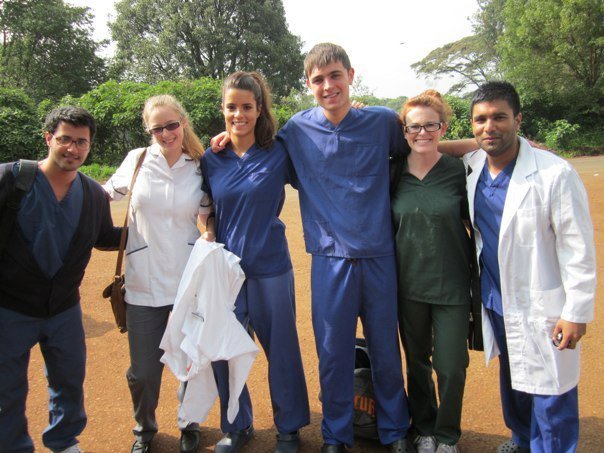
The load-bearing element is the evening reflection seminar. Cohorts that skip it come home with anecdotes; cohorts that run it every night come home with analysis. That is the faculty member's contribution and it cannot be outsourced.
Cost, timing and group logistics
Kenya prices in the middle of our Africa band: £1,100–£1,800 per student for a 10–14 day programme, excluding international flights. That covers accommodation, all internal transport, in-country coordination, placement arrangement, most meals and 24/7 support. The levers that move it are group size, accommodation tier, number of partner sites, and whether the itinerary needs a domestic flight.
As with our other destinations, qualifying group sizes carry free faculty places — typically one per 10 paying students and two at 18 or more, which materially reduces the cost to the department.
On timing, the workable windows are June to October and January to March. Both sit outside the long rains and align reasonably with northern-hemisphere summer and winter breaks. Build to a 9–12 month lead time: institutional approval and risk review typically consume months nine through seven, and recruitment needs a clear two terms.
What to ask before you commit
Five questions that separate operators quickly:
- How long have you run programmes in Kenya specifically? Country-level tenure, not global headcount. Ours is fourteen years.
- Who are your in-country teams, and how are placements arranged? You want named coordinators with standing relationships to the facilities, not per-booking intermediaries.
- Can I see the risk assessment, accommodation audit and emergency response plan within 48 hours? Our standard documentation set is described on our safety and support page. An operator who needs three weeks has not written them.
- What is the written scope of practice for my students? It should be specific enough to hand to your travel committee unaltered.
- What verified ethical credentials do you hold? Impact Explorers is B Corp Certified with a verified Impact Score of 88.2. Certification is not a substitute for references — ask for three faculty leads who ran a programme in the last twelve months, and call them.
Next step
If Kenya is on your shortlist, the fastest way to test the fit is a 30-minute scoping call: tell us the course, the cohort size and your target window, and we will map your learning outcomes against specific facilities and partner sites. Request a proposal and you will have a two-page draft with a per-student price band within 48 hours. If you are still comparing options, the destinations directory and our educational travel overview are the better starting points, and the FAQ answers most travel-committee questions before they are asked.
Impact Explorers is the B Corp Certified parent of Volunteering Solutions and Med Trips, with 18 years designing educational travel and faculty-led programmes worldwide — and fourteen years of in-country teams in Kenya.
Related reading: Faculty-Led Programmes Abroad: A Complete 2026 Guide · 15 Best Destinations for Faculty-Led Group Trips in 2026