
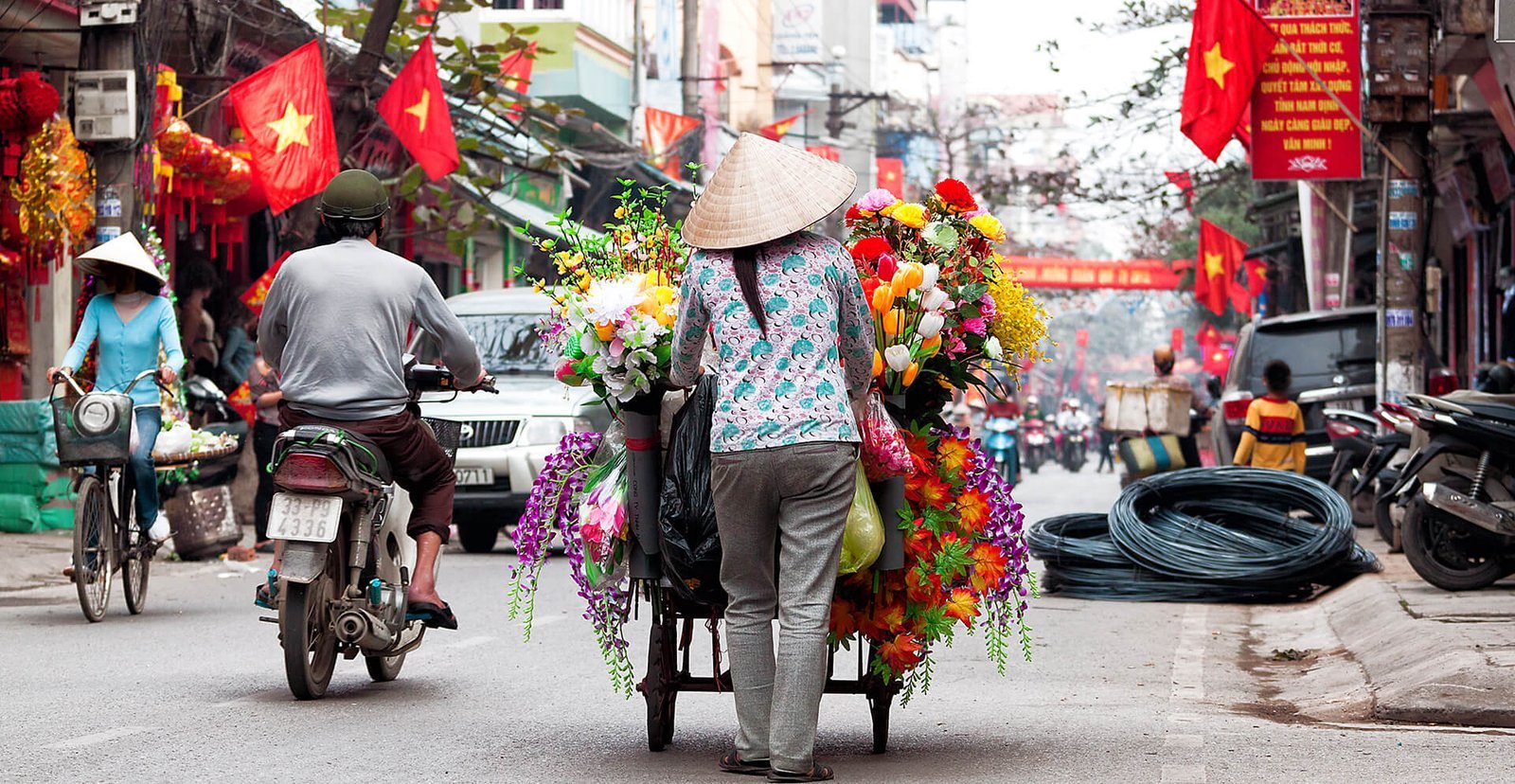
Educational Travel to Vietnam: A Department Chair’s Field Guide
Vietnam has become one of the most requested destinations for faculty-led programmes — and for good reason: it packs history, public health, business, environmental science and cultural immersion into a single, affordable, safe 10–14 day window. If you are a department chair or study-abroad officer weighing where to take your next cohort, this field guide walks through what Vietnam actually offers academically, what a well-run programme costs, how the logistics work, and the questions to settle before you sign a proposal.
Why Vietnam works for a faculty-led programme
Vietnam sits in a rare sweet spot. It is developed enough that infrastructure — domestic flights, reliable accommodation, English-speaking guides, hospitals — is dependable, but distinctive enough that students genuinely leave their frame of reference. For a two-week embedded course, that combination is hard to beat.
A few things make it especially strong for academic groups:
- Curricular range. The same country supports a history course (the American War, French colonialism, the Cham and Khmer legacies), a public-health course (rural clinics, urban air quality, the tobacco and traffic-injury burden), a business course (one of Asia's fastest-growing manufacturing economies), and an environmental course (the Mekong Delta, mangrove restoration, plastics in coastal waterways). Few destinations flex across so many departments.
- Cost. Vietnam remains one of the best-value destinations in Asia. Ground costs — accommodation, transport, meals, in-country staff — are markedly lower than Western Europe or East Asia, which is why a fully supported 12-day programme lands in the region of £950–£1,800 per student depending on group size and standard, exclusive of international flights.
- Compact geography. Hanoi in the north, Hoi An and Da Nang in the centre, and Ho Chi Minh City with the Mekong Delta in the south are all connected by short, cheap domestic flights. A group can experience three genuinely different regions without long overland days eating into teaching time.
- Safety. Vietnam has low rates of violent crime and a stable operating environment, which matters when your travel committee reviews the proposal. The practical risks — road traffic, heat, stomach upsets — are the ordinary, manageable kind.
What students actually study on the ground
The value of a faculty-led programme comes from tying travel to your existing learning outcomes, not from sightseeing. Vietnam gives faculty an unusual amount of raw material to work with. A few examples of how departments use the country:
- History and political science. The Cu Chi tunnels, the War Remnants Museum, the Hoa Lo prison and the Reunification Palace turn a semester's reading into something students stand inside. Pairing these with a guest lecture from a Vietnamese historian gives them a second, non-Western narrative to reckon with.
- Public and global health. Groups visit community clinics, meet local health workers, and study how a middle-income country manages non-communicable disease, road-traffic injury and rapid urbanisation. For pre-health and nursing cohorts this pairs naturally with the structured medical placements our sister brand Med Trips runs across Asia.
- Business and economics. Factory visits, a session with a trade or logistics firm, and time in Ho Chi Minh City's start-up scene let business students see a supply-chain economy up close rather than as a case-study abstraction.
- Environmental science. The Mekong Delta is a living laboratory for water management, salinity intrusion, aquaculture and climate adaptation. Coastal sites near Hoi An support mangrove and plastics fieldwork.
- Culture, language and the arts. Cooking classes, a lantern workshop in Hoi An, and homestays in the northern highlands give humanities and language students structured cultural immersion with clear reflective assignments attached.
The strongest Vietnam programmes we help build share one trait: the faculty member decides the academic spine first, and we reverse-engineer the itinerary to serve it. The itinerary is the delivery mechanism, never the point.

A realistic 12-day itinerary shape
Every programme is bespoke, but it helps to see a typical skeleton. The version below suits a mixed history-and-culture cohort; a public-health or business group would swap the site visits accordingly.
- Days 1–4 — Hanoi and the north. Arrival, orientation, the Old Quarter, Ho Chi Minh Mausoleum complex, a museum day, and an overnight excursion to Ha Long Bay or the Ninh Binh countryside.
- Days 5–8 — Central Vietnam. Fly to Da Nang; base in Hoi An for the ancient town, a hands-on workshop, a service or fieldwork component, and a day trip to the My Son Cham ruins or the Hai Van Pass.
- Days 9–12 — The south. Fly to Ho Chi Minh City; the Cu Chi tunnels, the War Remnants Museum, a Mekong Delta day, final reflective seminar and departure.
Two weeks is the commonest length because it fits inside a winter, spring or summer break without forcing students to miss home-campus teaching — the same logic set out in our complete 2026 guide to faculty-led programmes.
When to go, and how long to stay
Timing shapes both the experience and the price. Vietnam's climate splits by region, so there is no single perfect window, but a few rules of thumb help:
- Spring (February–April) is the most reliable nationwide — dry and comfortable in the centre and south, cooler in the north. It is the most popular window and the one to book earliest.
- Summer (June–August) suits break-schedule programmes and works well, though the central coast is hot and the north sees afternoon rain. Budgets can stretch a little in peak domestic-travel months.
- Autumn (September–November) is quieter and good value, with the caveat that the central region can catch late-season storms.
On length, 10–14 days is the sweet spot: long enough to reach three regions and let learning settle, short enough to sit inside a break without displacing home-campus teaching. Programmes shorter than a week rarely justify the long-haul flight; anything past three weeks starts to compete with a semester option on cost.
What a fully supported programme includes
When you delegate operations to an in-country partner, the faculty member keeps the academic ownership — syllabus, assessment, contact hours — while the logistics move off your desk. For a Vietnam programme run through our faculty-led groups service, that typically covers:
- All in-country accommodation, ground transport and domestic flights
- Most meals, plus dietary and allergy management
- Vetted programme partners — clinics, NGOs, businesses, cultural hosts — matched to your learning outcomes
- A dedicated in-country coordinator with the group throughout, plus 24/7 in-country support from our local teams
- Airport transfers, entrance fees, guides and translators
- Pre-departure documentation for your risk-management office and a full emergency-response plan
The people who make this work are our in-country teams — Vietnam-based coordinators who know the sites, the partners and the roads, rather than a head-office desk booking from afar. That local presence is what lets a programme adapt on the day when a flight shifts or the weather closes a site.
Safety, risk and getting it past your travel committee
Most faculty-led proposals live or die at the risk-review stage, so it pays to prepare for it early. Vietnam is a low-risk destination, but your committee will still want specifics. Build these into the proposal:
- Health. Confirm routine and hepatitis vaccinations, brief students on food and water hygiene, and check your medical cover includes evacuation. Vietnam's private hospitals in the major cities are good; rural areas are further from care, which shapes itinerary choices.
- Road safety. Traffic is the single biggest practical risk. A reputable operator uses vetted drivers and vehicles and does not put students on motorbikes.
- Insurance. Every participant needs comprehensive travel and medical insurance with evacuation cover; verify the policy limits rather than assuming.
- Emergency planning. Ask to see the operator's 24/7 contact protocol and incident-response plan in writing before you sign.
Our safety framework and the documentation pack we supply are designed to answer travel-committee questions before they are asked. If your institution has a formal approval workflow, factor in the usual 9–12 month timeline from first scoping call to departure, with the risk review clearing 6–7 months out.
What it costs, and how to think about value
Price depends on group size, accommodation standard, the number of internal flights and how service-heavy the itinerary is. As a planning band, a supported 12-day Vietnam programme typically sits at £950–£1,800 per student, before international airfares. Larger groups lower the per-student figure because fixed costs — a coordinator, a coach — spread further.
Set against a semester abroad at many times the price, a faculty-led fortnight delivers measurable international learning outcomes at a fraction of the cost, which is exactly why departments reach for them to widen participation among working, transfer and first-generation students. For a fuller cost breakdown across destinations, see our 15 best destinations for faculty-led group trips in 2026.
Why run it through a B Corp
Impact Explorers is the B Corp Certified parent of Volunteering Solutions and Med Trips, which means our programme partners, in-country teams and community relationships are held to an audited standard rather than a marketing claim. For faculty building a service-learning or ethics component into a Vietnam programme, that matters: students can see how a responsible operator structures its local partnerships instead of taking the word "impact" on trust. Our B Corp credentials and educational travel approach set out how we hold that line.
Ready to scope a Vietnam programme?
If Vietnam fits a course you already teach, the next step is a short scoping call. Tell us your learning outcomes, rough dates and group size, and we will send back a two-page proposal — destinations mapped to your outcomes, a suggested itinerary shape and a per-student price band — usually within 48 hours. Request a proposal and we will take the logistics from there while you keep the academics where they belong. Any questions on approvals, insurance or timelines are covered in our FAQ.
Related reading: Faculty-Led Programmes Abroad: The Complete 2026 Guide and 15 Best Destinations for Faculty-Led Group Trips in 2026.