
15 Best Destinations for Faculty-Led Group Trips in 2026
Choosing a destination is the most consequential decision a faculty member makes when planning a group trip — it shapes the curriculum, the budget, the safety profile and the kind of learning that becomes possible. These are the 15 destinations we consider strongest for faculty-led group trips in 2026, based on what 280+ university and school groups actually chose to do last year. Each entry includes the typical disciplines that fit, indicative per-student cost, the best window to travel, and a starting itinerary idea.
1. Sri Lanka — global health, conservation, sustainable tourism
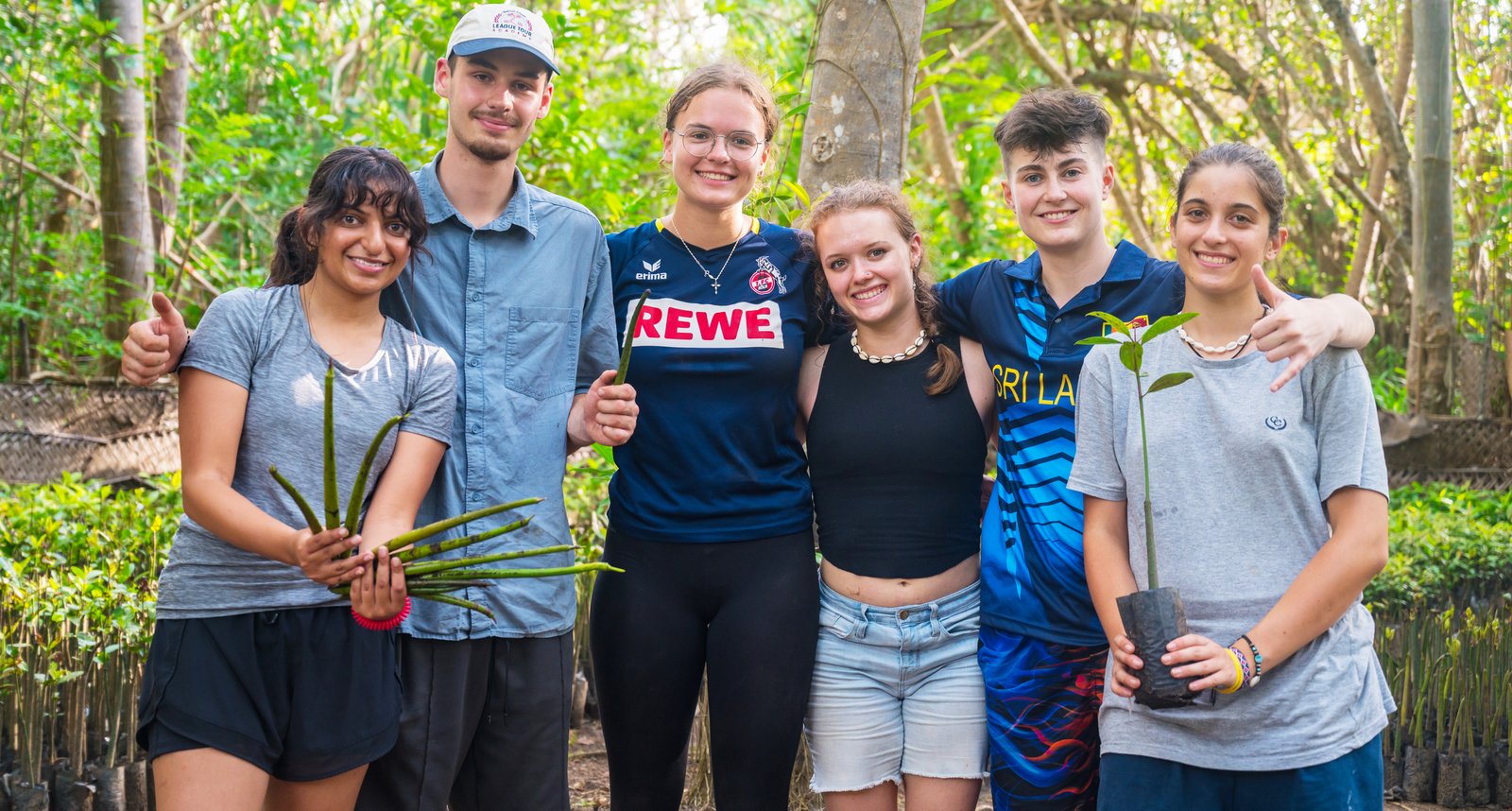
The single most-booked destination across our 2025 university clients. The island compresses an extraordinary range of programmes — coastal conservation in Galle, tea-estate community work in the central highlands, urban global-health placements in Colombo — into a country small enough that a 12-day itinerary can include three distinct regions without the cohort spending a single day on a long-haul transfer.
- Disciplines: global health, public health, hospitality, conservation biology, education, sustainability, tourism management
- Cost band: £950–£1,500 per student for 10–14 days
- Best window: January–April or July–September (avoiding monsoon belts)
- Itinerary idea: 4 days clinical observation in Colombo public hospitals → 4 days rural community health in Kandy district → 4 days coastal conservation and community work near Galle
See our Sri Lanka programme page for partner organisations and recent itineraries.
2. Costa Rica — biology, environmental science, sustainability
If your course touches biodiversity, climate or sustainability, Costa Rica is almost certainly the right choice. Five distinct ecosystems within a 4-hour drive, a long-established research-station network and English-comfortable host communities make programme design unusually easy.
- Disciplines: biology, environmental science, sustainability, Spanish-language immersion, hospitality, agriculture
- Cost band: £1,400–£2,000 per student for 10–14 days
- Best window: December–April (dry season)
- Itinerary idea: Cloud forest at Monteverde → Caribbean coast turtle conservation at Tortuguero → Sustainable coffee in the Central Valley
3. Kenya — public health, conservation, social work
Strong programme infrastructure outside Nairobi, particularly in the Rift Valley and around Kisumu. Excellent for medical and nursing student groups looking at primary-care delivery in resource-limited settings, and for biology and conservation cohorts.
- Disciplines: public health, global health, nursing, social work, education, conservation, wildlife biology
- Cost band: £1,100–£1,800 per student for 10–14 days
- Best window: June–October or January–March
- Itinerary idea: Urban health placement in Nakuru → Rural community programme around Naivasha → Conservation weekend in the Maasai Mara
4. Vietnam — business, history, education, international relations
Vietnam is having its moment for university groups in 2026 — economic-development modules in Ho Chi Minh City, post-war history and reconciliation studies in central provinces, education and English-teaching placements in the north. Infrastructure is excellent, internal flights cheap, and student feedback is consistently among our highest.
- Disciplines: business, international relations, history, education, hospitality, contemporary politics, public health
- Cost band: £1,200–£1,800 per student for 10–14 days
- Best window: October–April (cooler, drier)
- Itinerary idea: Ho Chi Minh City business and history → Hue heritage and central provinces → Hanoi education placements + Halong Bay weekend
5. Peru — anthropology, archaeology, biology, Spanish
For programmes that want depth in any of Peru’s three Perus — coast, mountains, jungle — the country still over-delivers on academic substance per dollar. Strong NGO networks in the Sacred Valley, excellent research stations in the Amazon, and Cusco as a base that students rarely forget.
- Disciplines: anthropology, archaeology, Spanish, biology, indigenous studies, community development, public health
- Cost band: £1,500–£2,300 per student for 12–14 days
- Best window: May–September (dry season in highlands)
- Itinerary idea: Sacred Valley community work + Machu Picchu → Cusco language and culture → Amazon biology station near Puerto Maldonado
6. India — global health, business, social entrepreneurship, religious studies
India is the most flexible destination on this list — a 14-day programme can focus tightly on one city (Bengaluru tech, Mumbai finance, Delhi policy, Varanasi religious studies, Jaipur heritage) or move across regions. Operationally complex, which is exactly why a strong in-country partner matters.
- Disciplines: global health, business, social entrepreneurship, religious studies, history, public policy, education
- Cost band: £1,000–£1,700 per student for 12–14 days
- Best window: November–March
- Itinerary idea: Delhi policy + heritage → Jaipur social-enterprise → Agra and Varanasi religious-studies field study
7. Tanzania — conservation, global health, wildlife biology
The combination of Kilimanjaro region health placements, Serengeti conservation work and Stone Town heritage on Zanzibar produces some of the most coherent multi-discipline programmes we build. Stronger fit for groups that want both clinical exposure and wildlife biology in a single trip.
- Disciplines: global health, conservation, wildlife biology, education, public health
- Cost band: £1,500–£2,200 per student for 12–14 days
- Best window: June–October (dry season)
- Itinerary idea: Arusha global health placement → Serengeti conservation 3 days → Zanzibar history and marine biology
8. Thailand — global health, hospitality, conservation
Underrated for university groups. Bangkok’s hospital network gives medical-student groups real teaching ward exposure, Chiang Mai is excellent for community development and education, and the islands offer credible marine-biology and conservation work. Logistically the easiest country in Southeast Asia.
- Disciplines: global health, hospitality, conservation, marine biology, education, Buddhist studies
- Cost band: £1,100–£1,800 per student for 12–14 days
- Best window: November–March
- Itinerary idea: Bangkok hospital placements → Chiang Mai community work → Koh Tao marine conservation weekend
9. Ghana — African studies, history, education, public health
The most academically substantive destination in West Africa for university programmes — strong university partnerships in Accra, ethical heritage tourism around Cape Coast (the slave-trade castles are essential field sites for any African Diaspora course), and rural community programmes in the Volta region.
- Disciplines: African studies, history, education, public health, anthropology, African Diaspora studies
- Cost band: £1,400–£2,100 per student for 12–14 days
- Best window: November–March (dry season)
- Itinerary idea: Accra cultural orientation → Cape Coast heritage and history → Volta region community programmes
10. Ecuador — biology, indigenous studies, Spanish
Ecuador packs more biome variety per square kilometre than almost anywhere on earth. Combine highland indigenous community work with Amazon research and (budget permitting) a Galapagos add-on for a programme that is impossible to replicate anywhere else.
- Disciplines: biology, indigenous studies, Spanish, environmental science, public health
- Cost band: £1,600–£2,400 per student for 12–14 days
- Best window: June–September
- Itinerary idea: Quito and the Andes → Amazon research at Yasuní → optional Galapagos extension
11. Nepal — global health, anthropology, mountain studies
For programmes that want both Himalayan field experience and Kathmandu’s NGO ecosystem, Nepal is unmatched. Strong medical-student placements in Kathmandu Valley hospitals; community-development work in mid-hill villages; trekking-region environmental and cultural studies.
- Disciplines: global health, anthropology, environmental studies, religious studies, education
- Cost band: £1,200–£1,800 per student for 12–14 days
- Best window: October–November or March–May
- Itinerary idea: Kathmandu hospital and NGO placements → Pokhara community work → Annapurna foothills cultural field study
12. South Africa — global health, business, post-conflict studies
Cape Town and Johannesburg between them cover an extraordinary range — business and finance modules, public-health placements addressing HIV and TB epidemiology, post-conflict reconciliation studies, and conservation work in the Western Cape. Best in class for English-medium programmes.
- Disciplines: global health, business, post-conflict studies, conservation, social work
- Cost band: £1,500–£2,400 per student for 12–14 days
- Best window: February–April or September–November
- Itinerary idea: Cape Town health and history → Johannesburg post-apartheid studies → Garden Route conservation weekend
13. Cambodia — history, post-conflict studies, education
For programmes touching genocide studies, post-conflict transitional justice, or rural education, Cambodia delivers some of the most affecting student experiences we facilitate. Phnom Penh’s history programmes and Siem Reap’s heritage work pair naturally.
- Disciplines: history, post-conflict studies, education, anthropology, archaeology
- Cost band: £1,000–£1,600 per student for 12–14 days
- Best window: November–March
- Itinerary idea: Phnom Penh history and reconciliation → rural education week in Kampong Cham → Siem Reap archaeology and conservation
14. Romania — European studies, education, social policy
The strongest faculty-led destination in Eastern Europe. Bucharest’s institutional access, Cluj-Napoca’s university network and Transylvania’s heritage make a 10-day programme remarkably easy to assemble. Particularly good for European Union policy and post-communist transition studies.
- Disciplines: European studies, social policy, education, history, public health, child protection
- Cost band: £1,300–£1,900 per student for 10–12 days
- Best window: April–October
- Itinerary idea: Bucharest institutions and policy → Cluj-Napoca university partnership → Transylvania heritage and rural community work
15. Argentina — Spanish, social policy, urban studies
Buenos Aires anchors a programme that combines deep Spanish-language immersion with urban policy field work and (for biology programmes) a Patagonia extension. Operationally smooth, culturally rich, and academically substantive for a wide range of social-science courses.
- Disciplines: Spanish, urban studies, social policy, history, environmental science (with Patagonia extension)
- Cost band: £1,600–£2,400 per student for 12–14 days
- Best window: October–April
- Itinerary idea: Buenos Aires urban policy and Spanish → Mendoza wine-region sustainability → optional Patagonia environmental extension
How to choose between these
For most departments, three filters narrow the list quickly:
- Discipline alignment. Pick the country where your course’s learning outcomes can be observed and assessed in actual field settings. A global-health course should not go to Romania; a European-policy course should not go to Sri Lanka.
- Budget headroom. Asia tends to deliver the lowest per-student cost; Latin America and Europe sit in the middle; Sub-Saharan Africa and South America vary by destination. If your department is fundraising for the trip, lower per-student cost often unlocks larger cohort sizes.
- Logistical complexity tolerance. Costa Rica, Thailand and Romania are operationally smooth. India, Kenya, Nepal and Cambodia are more complex but more academically rewarding when run well. The complexity scales directly with the quality of the in-country partner.
Next step
If you’re at the “narrowing the list” stage, the fastest way to validate a destination is a 30-minute scoping call. Tell us your course, your group size and your dates and we’ll match you to the right destination and partner network. Request a proposal for a tailored 2-page draft within 48 hours, or browse our full destinations directory.
Impact Explorers is the B Corp Certified parent of Volunteering Solutions and Med Trips, with 18 years designing educational travel and faculty-led programmes worldwide.
Related reading: Faculty-Led Programmes Abroad: A Complete 2026 Guide · FAQ for Faculty-Led, Volunteer & Group Travel