Pre-Med Volunteer Abroad: Building a Strong Medical School Application
A summer spent shadowing clinicians abroad will not, on its own, get a student into medical school — but the right international experience, framed honestly, can become one of the strongest paragraphs in a personal statement. As a pre-health adviser or faculty mentor, you are the person students trust to tell them which programmes genuinely strengthen an application and which quietly weaken it. This guide sets out what admissions committees actually value in an overseas medical experience, how to steer students toward programmes that stand up to scrutiny, and how to help them turn the experience into a credible narrative rather than a line on a CV.
What admissions committees are really looking for
Medical schools on both sides of the Atlantic have grown sceptical of the "voluntourism" personal statement — two weeks abroad, a handful of photographs, and a paragraph about how the trip "changed my perspective". Admissions committees read thousands of these. What distinguishes a strong international experience is not the destination or the duration; it is evidence of the competencies the profession is trying to select for.
In practice, committees are reading an overseas experience for signals of:
- Sustained commitment — a pattern of service, not a one-off trip bolted on the summer before applications open
- Realistic understanding of clinical work — including its limits, its ethics and its unglamorous parts
- Cultural humility — the ability to work respectfully within a health system that is not your own
- Reflection — what the student learned about themselves, medicine and the community, expressed specifically rather than in platitudes
- Ethical judgement — an awareness of scope-of-practice boundaries and why they matter
Notice what is absent from that list: performing procedures a student is not trained for. A programme that lets an undergraduate suture, deliver a baby or administer injections is a red flag to any serious admissions reader, not a selling point. Part of your job as an adviser is to help students want the right things from the experience.
The hands-on myth — and what "hands-on" should mean
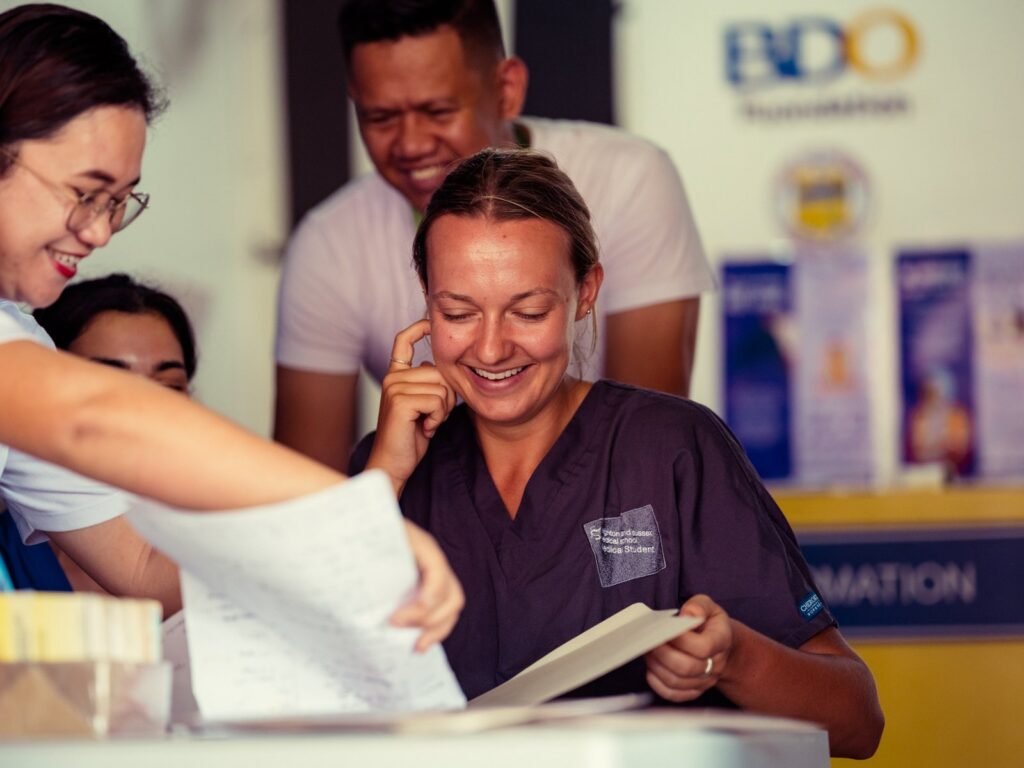
The single most common mistake pre-med students make is chasing clinical tasks they are not qualified to perform. It is worth being blunt with them about this. Ethical medical placements abroad follow the same scope-of-practice rules that govern a UK or US hospital: observation, supported learning, and genuinely appropriate assisting — never unsupervised patient care by an untrained student.
A well-run medical placement is measured by the quality of what a student observes and reflects on, not by the number of procedures they were improperly allowed to attempt.
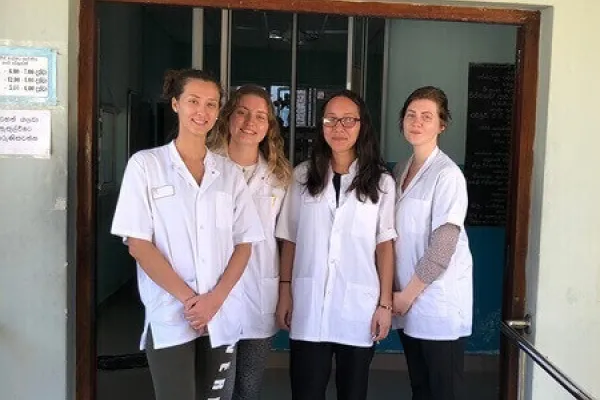
The good news is that observership done properly is far more valuable to an application than a compromising story about doing too much. A student who can write intelligently about how a rural clinic in Sri Lanka triages patients with limited diagnostics, or how a Ghanaian maternity ward manages caseload with the staff it has, demonstrates exactly the clinical maturity committees want. Our partner brand Med Trips structures its medical placements around supervised observation, structured reflection and daily debriefs with in-country teams precisely because that is what produces defensible, application-ready experience.
Timing: where the experience fits in a pre-med timeline
Advisers add the most value by getting the timing right. An international placement lands very differently depending on when in a student's journey it happens.
- First and second year — the ideal window. An early experience gives students time to build on it, seek local clinical exposure afterwards, and demonstrate a sustained trajectory rather than a last-minute box-tick.
- Penultimate year — workable, particularly if it connects to prior volunteering or a research interest the student can develop.
- Application year — the weakest position. A trip taken weeks before submitting reads as instrumental, and students have no time to let the experience mature into genuine reflection.
The lesson for students is simple: go early, then keep going. One two-week placement abroad in first year, followed by two years of local hospital volunteering, tells a far more convincing story than a single trip the summer before applications.
How this works as a faculty-led programme
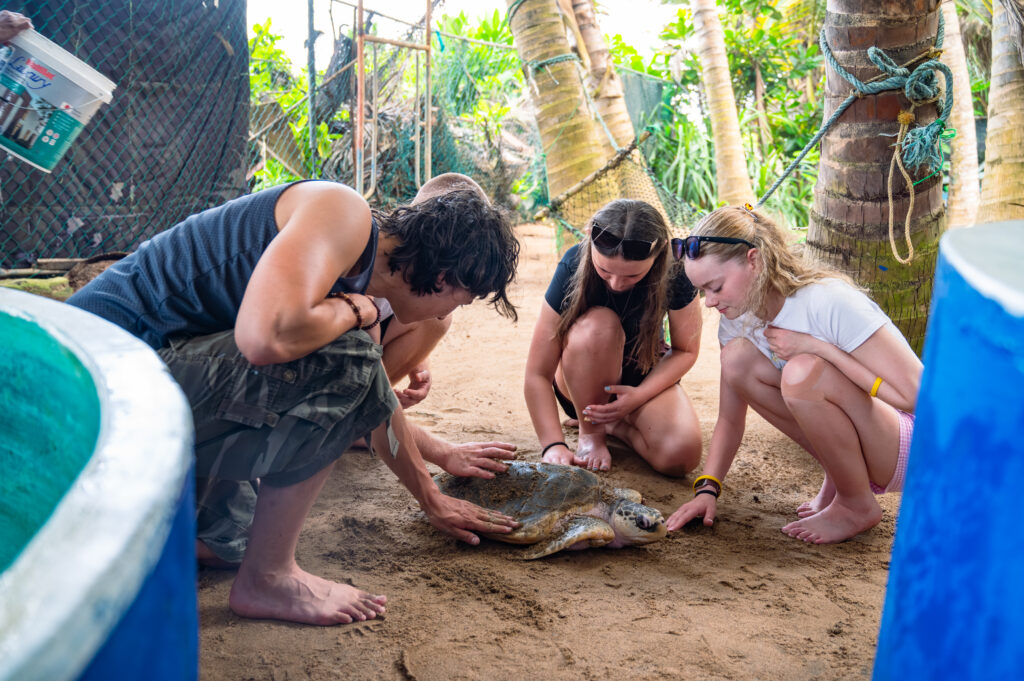
Increasingly, pre-health departments are choosing not to send students off individually but to run a faculty-led programme — a short, department-owned experience led by a faculty member, built around a specific set of learning outcomes. For a pre-med or public-health cohort this has real advantages over ad-hoc individual placements.
- Consistency of experience — every student gets the same ethically-framed exposure, so the department can vouch for it
- Faculty oversight — a home academic travels with the group, keeping the clinical and ethical framing under your institution's control
- Structured reflection built in — pre-departure briefings, in-country debriefs and post-trip assessment turn observation into a graded, transcriptable experience
- Cost efficiency — a group programme typically runs at a fraction of the per-student cost of a semester abroad, with published price bands in the region of £950–£1,800 per student depending on destination and length
Impact Explorers builds these programmes on a 9–12 month timeline, from a first scoping call through institutional sign-off to delivery, with in-country teams handling accommodation, transport, clinical partners and 24/7 support on the ground. If you are weighing whether to formalise your pre-med cohort's overseas experience, our complete 2026 guide to faculty-led programmes walks through the full build.
Choosing a destination that strengthens the application
Destination matters less than students think and more than they realise. It should be chosen for the quality of the clinical partnership and the safety of the setting, not for how impressive it sounds. That said, some destinations offer particularly rich learning environments for pre-health students:

- Sri Lanka — Impact Explorers has worked here for 18 years, with established hospital and community-health partnerships and a free national health system that gives students a genuinely different model to observe. Our Sri Lanka programmes are among the most requested for medical cohorts.
- Kenya and Tanzania — strong for students interested in global and public health, tropical disease and resource-limited care.
- Ghana — well-developed maternal and community-health placements with experienced in-country teams.
Whatever the destination, the questions you should coach students to ask are the same: Who supervises me? What is my scope? How does the programme protect patients as well as students? A programme that answers those clearly is one an admissions committee will respect. You can point students to the frequently asked questions and our safety and risk framework to see how a reputable operator answers them.
Turning the experience into a personal statement
This is where advisers earn their keep. The experience is raw material; the personal statement is the finished argument. Coach students away from the clichés and toward specificity.
Weak: "Volunteering in a hospital in Africa taught me the value of compassion and confirmed my passion for medicine."
Strong: "Watching a clinician in a rural Sri Lankan ward manage a diabetic patient with two working glucometers for forty beds made me rethink what 'resourcefulness' means in medicine — and why the systems that surround a doctor matter as much as the doctor."
The strong version works because it is grounded in a specific observation, shows the student thinking, and connects to a larger idea about medicine. It also, crucially, describes something a student could ethically have witnessed. Encourage students to keep a reflective journal during the placement — the specificity that makes a statement sing is almost impossible to reconstruct months later from memory.
Red flags to warn students about
Finally, help students screen out programmes that could damage an application. Warn them off any operator that:
- Advertises unsupervised clinical procedures for untrained students
- Cannot explain who supervises participants or what the scope-of-practice boundaries are
- Frames the work primarily around what the student gets, with the host community as backdrop
- Has no transparent safeguarding, safety or ethics policy
- Charges premium fees with no clear account of where the money goes
A useful shorthand: a genuinely ethical operator will happily talk about the community's needs before the student's CV. Impact Explorers is a certified B Corp, which means its social and environmental performance is independently audited — a signal worth teaching students to look for across the whole sector. For the wider context of ethical placements, Volunteering Solutions publishes detailed programme breakdowns that show what responsible pricing and structure look like in practice, and our educational travel pages set out how we frame learning outcomes.
Helping your students get it right
The students who benefit most from an overseas medical experience are the ones who go in with realistic expectations, an ethical frame and a plan to build on it — and that framing almost always comes from a good adviser. If your department is considering a structured, faculty-led medical or pre-health programme abroad, we would be glad to map it against your learning outcomes and send back a costed proposal, usually within 48 hours. Request a proposal and we will start with a short scoping call about your cohort and where you want to take them.
Talk to us about your cohort
Tell us your department, rough group size and the outcomes you want the placement to serve. An in-country programme lead will come back to you — usually within 48 hours — with a costed proposal and destination options. No obligation.
Related reading: Medical Electives Abroad: What Actually Counts as Hands-On? and 15 Best Destinations for Faculty-Led Group Trips in 2026.